


– by Lakshmi Mohan
In Adyasha Das’s CRCC life, every day is a bumper harvest. She is the Cluster Resource Centre Coordinator of the Udala cluster in Udala NAC block, Mayurbhanj district, an effervescent, positive-minded education official whose buzz and bustle are infectious. Not a day goes without a school visit, however brimful her schedule. There’s a splurge in classrooms when she arrives, often on her Hero Scooty, with that aura of a person in charge, at 33, capable, competent, and full of heart.
Children flock to her as to a long-awaited friend., and she envelops them in radiance, joy, and boundless enthusiasm. “We have an intimate connection. I learn from them. They teach me lessons elders can’t.” They share their academic successes and failures, their woes, their aspirations. Adyasha divests herself of her CRCC mantle and falls in tune with them, reaching out with a warm, protective hug. You would find her sitting cross-legged with them with Ganitha Kalika Andolana’s (GKA) teaching-learning materials (TLMs), unlocking the essential simplicity of maths. She elevates their school experience. She has that knack of somehow making it richer.
‘Vision’ is a theme, an inspiration, she frequently refers to. When she was a teacher for five years, “What I did for that one school – I had a vision for that.” Now as CRCC in charge of all 29 primary, upper primary, and high schools in her cluster her vision has broadened and strengthened. “Many schools, different problems. I got a big opportunity. I got exposure. I developed skills and know-how. I gained insight. I dedicated myself.” Functioning in this larger space, her vision for her students grew. Solving their problems and fulfilling their potential became her goals. “I believe my biggest role is to connect with children. They must consider us their own for the bond to become stronger.”
Adyasha is a Numeracy Resource Person for Odisha, selected and appointed by the state government. Also, a GKA Resource Person and Trainer. During her school visits, she shapes the maths class into a jubilant domain. The GKA kit is often unveiled. “The children are happy. Learning by Doing. It’s learning that remains stable and lifelong. If only you had introduced GKA earlier, my students would have had better concept clarity by now.”
Manoj Kumar Panda, Akshara’s District Field Manager, who has known her for a few years, talks of Adyasha’s initiative and her innovations, her keen enthusiasm. Manoj and Dinesh Rout, Akshara’s District Coordinator find her multifaceted, a campaigner of girls’ rights, a community worker, and a motivator extraordinaire. Her CRCC role subsumes a diverse array of work.
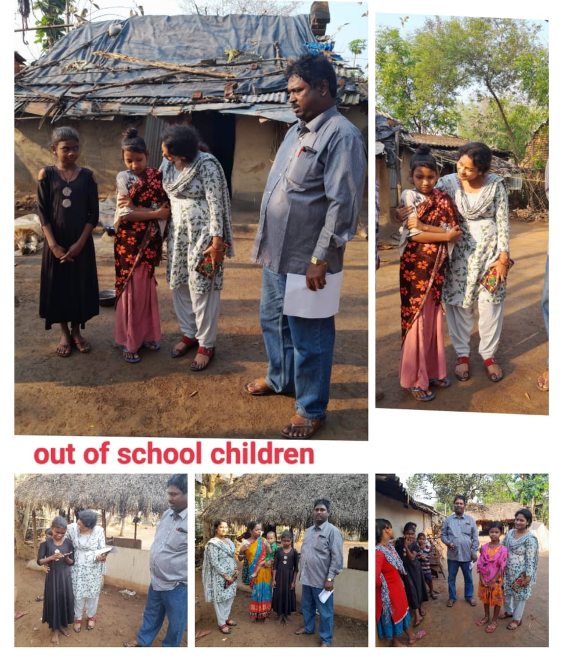
When Sonali Murmu of grade 4, a tribal girl, an innocent, “happy child,” was suddenly whisked from school by her parents to get married, Adyasha was shattered. Her spirit rose to counter the injustice. This is a backward tribal area, she says. The girl child gets stripped of access to opportunity. In the community meetings and parents’ forums Adyasha holds regularly she drives home the importance of education for their girls, the need for social reform.
She went in full force with the local administration flanking her to Sonali’s parents’ home. They’re daily wage labourers. Adyasha and her team pleaded, cajoled, and urged them, and finally gently slipped in the fact that child marriage is a punishable offence under the law. The parents, mollified and remorseful, broke the marriage, and brought Sonali back to school. “The girl looked like she had suffered mental trauma. She was uncommunicative. She thought her life had come to an end.” Two years have gone by. Sonali is in grade 6, and the brightness, the smile she had before, has returned to her face. “She’s living life to the fullest,” says Adyasha. A free, unbounded spirit once again, happy to be in school.
It was one of Adyasha’s finest moments as CRCC. “I came here young, inexperienced, to a tribal area with girls’ issues, people living in poverty and distress.” This is not just a job she does for the state Education Department, she says. She responds to a higher calling. Cluster-sharing meetings are a mandated part of CRCC work. But she takes it beyond guidelines and limited boundaries. Adyasha has formed a research group of teachers to delve deep into children’s academic and non-academic aspects. “We explore their problems and potential. We gain insight from it. We all meet and share our feedback and opinions. I often seek expert, professional advice to take children forward to a higher level.”
“The morning determines the day.” She seizes that fructuous time soon after the 30-minute morning prayer when she unleashes Magical Mathematics, a quick, brain-activating quiz programme to improve mental agility and maths acuity. She draws the content from GKA and other sources and sets up a stir among the children.
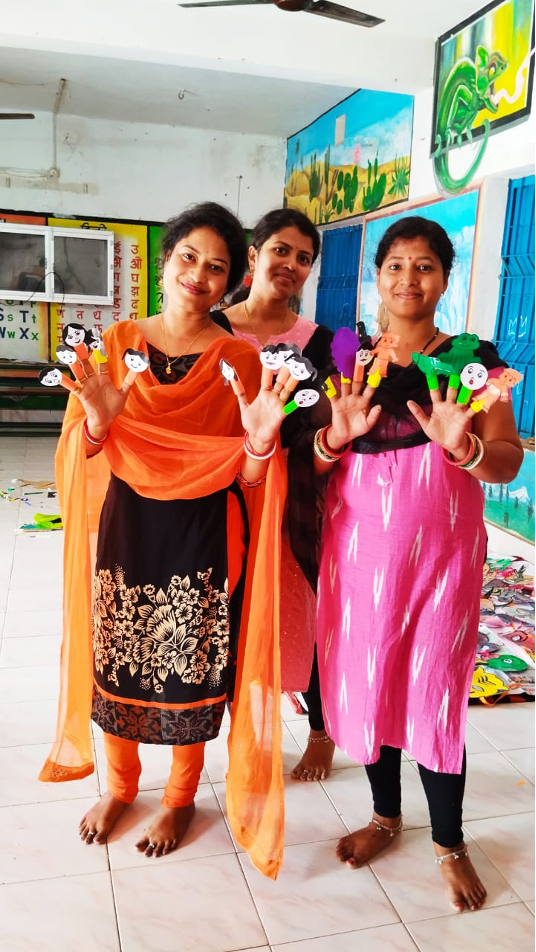
In Adyasha’s cluster, there’s no dearth of opportunity. She floods children with it. Carroms with numbered disks and bottle games for maths, the “Happy Saturday” every week, an afternoon of creating and designing, when “children can open their hearts and give free expression to their creative instincts” with waste materials like cards, rope, cloth, wood, leaves, and anything that catches their fancy. Not only arts and crafts, but the children also make simple numeracy TLMs, which they use in class.
The one-and-a-half hours has become so popular children plan it. It gives their routine a break and their minds the spaciousness for ideas. “Academically these children may be a little weak, but they have a lot of skills.” Children have started coming more regularly to school. Saturday attendance is robust. Then there’s the exposure to practical daily living. Observing a post office in action, or a marketplace, and connecting maths with real life. For tribal children, dominated by fear and resistance to stepping out, these guided tours are revealing encounters.
The Ganita Hata (Maths Bazaar) springs up on special days in schools, an elaborate arrangement of stalls and kiosks for a bank, an ATM, a bazaar, a textile shop, all designed and operated by the children, with support from the teachers. At the bank they even learn how to use a cash withdrawal form and the value of Rs. 1000. This fresh idea demonstrates to children how maths intersects life at every turn.
There’s an irrepressible something to Adyasha’s style of working, Manoj notices. The excitement and vitality during her classroom visits, the hope and purpose with which her teachers deliver on goals. She’s able to impart that. But finally, as Manoj says, it’s the girl child who has been impacted the most in her cluster. Enrolment is high, and retention too.
The girl child is special. That’s a recurrent theme throughout her day’s work. Adyasha Das feels the need to shepherd them, to empower them – the Lakshmi Bai Self-Defence Training, the Walk and Talk programme, a therapeutic initiative for girls caught in the unsettling transition of adolescence, Our Story Our Experience, a forum that presents eminent women achievers who motivate girl students by sharing how they claimed their heights.

Adyasha Das would have made an excellent IAS officer. That was her original ambition. “Now I am here, and I do my best. I feel complete.” Transfers are a part of her profession. When it’s time to move on, what will her legacy be? “I want to be a teacher whose memory children cherish deep in their hearts, a smile blossoming when they think of me.”
One of Adyasha Das’s enduring legacies is that she strove to fortify the girl student and give shape to her destiny. “I say to them, ‘You too can be the lotus that blooms in the mud. Identify your strengths. You can face anything. You can take your dreams forward and set an example.’”